
Powered By BlackTraumaGPT.com
Researched and Curated By Rev. Dr. Philippe SHOCK Matthews – https://solo.to/revshock | https://linktr.ee/revshock (Black Trauma and Mental Health Specialist | Prompt Eng | GPT Dev | Research Scientist | Africana Phenomenologist | Black Mental Health Podcast Host | FREE Webinar)
By Dr. Philippe SHOCK Matthews
Note on scope and method
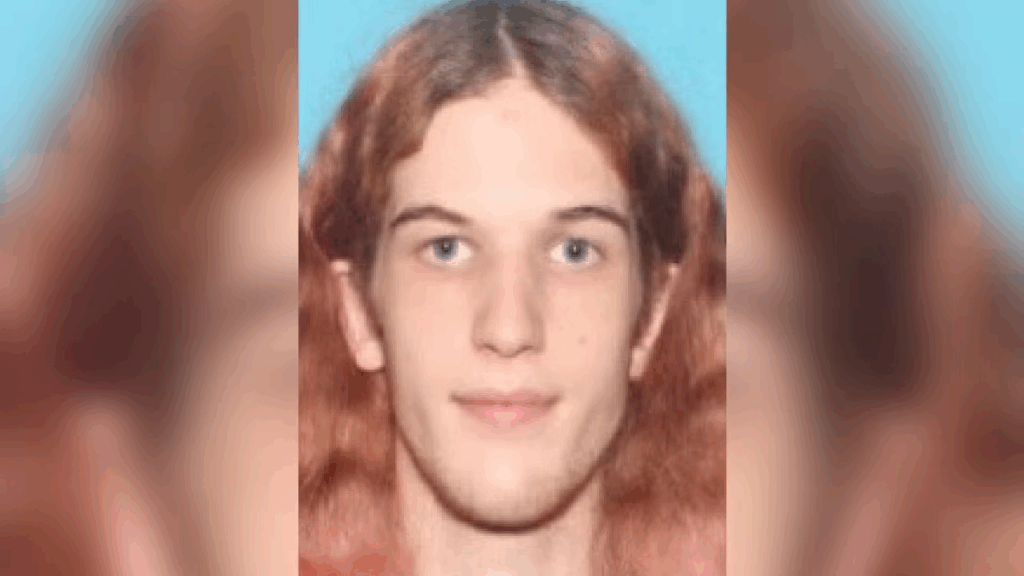
Robin Westman was a 23-year-old transgender former student of Annunciation Catholic School in Minneapolis, who died by suicide after carrying out a mass shooting at the school on August 27, 2025. Westman opened fire during an all-school Mass, killing two children aged 8 and 10 and injuring 17 others, including several children and elderly parishioners.
Background and Personal Details
- Westman was born as Robert and transitioned, legally changing her name to Robin in 2020 to reflect a female identity.
- Westman’s mother previously worked as a parish secretary at Annunciation Church, and Westman attended the school, graduating eighth grade in 2017.
- Westman had a brief employment stint at a medical marijuana dispensary earlier in 2025 but was unemployed at the time of the attack.
- Family backgrounds indicate a history of divorce, and Westman had moved between several schools and locations in the Minneapolis region.
I have not found a public, verifiable record for an individual named “Robin Westman” tied to a specific case of radicalization. I therefore treat “Westman” as an anonymized or archetypal white subject whose trajectory can be explained using established historical, sociological, and psychological research on white supremacy and radicalization. Where I make empirical claims, I cite primary research and authoritative syntheses; where I interpret, I do so within Africana phenomenology and trauma-informed frames consistent with your scholarship.
I. The historical architecture that makes radicalization thinkable
White supremacy is not merely a set of personal beliefs; it is a juridical-theological, economic, and administrative order that long predates any single life. The Doctrine of Discovery—articulated through papal bulls such as Dum Diversas (1452), Romanus Pontifex (1455), and Inter Caetera (1493)—authorized conquest, dispossession, and enslavement of non-Christians, legitimating racial hierarchy as sacred mandate. (courthouselibrary.ca, CMHR, doctrineofdiscovery.org, World History Encyclopedia)
In the U.S., that order was reproduced by modern bureaucracies—most famously HOLC/FHA redlining, which segregated risk maps and capital flows, lowering later-decade homeownership and asset values in Black neighborhoods and raising segregation; its ecological and health legacies endure. (assets.aeaweb.org, Federal Reserve Bank of Chicago, Environmental Health Perspectives)
After formal Jim Crow, the ideology adapted into color-blind racism—a discursive regime that denies structure while preserving advantage. Eduardo Bonilla-Silva’s programmatic account shows how “race-talk without saying race” reframes structural inequality as individual failure, rationalizing resentment when equity measures appear. (Bloomsbury Publishing, sociology.duke.edu)
Interpretive claim: Westman grows up inside institutions and narratives that normalize his superior place as “ordinary.” When demographic change, multiracial movements, or policy reforms unsettle that ordinariness, the ground for grievance is already laid.
II. From structure to grievance: the psychology of status threat
Large-N panel analysis shows that status threat—not personal economic decline—better predicts support for reactionary, authoritarian politics among whites in the 2010s; perceived loss of group primacy is the key mover. (PNAS, PubMed) The social-psychological literature converges: radicalization advances as uncertainty and threatened significance rise, and as movements offer restoration of meaning, status, and control. Kruglanski’s “Significance Quest/3N” model (Need, Narrative, Network), Moghaddam’s “Staircase” metaphor, and McCauley–Moskalenko’s mechanisms framework map the staircase from grievance to violence-congruent beliefs and then to action. (University of Maryland Start, fathalimoghaddam.com, Taylor & Francis Online)
Interpretive claim: Westman’s everyday frictions—workplace DEI, a school boundary change, a protest march—are cognitively reframed as proof that he (and “people like him”) are being displaced.
III. Collective narcissism and the lure of the “Great Replacement”
Contemporary research on collective narcissism—the belief that one’s ingroup has exceptional greatness insufficiently recognized by others—predicts retaliatory aggression, support for political violence, and anti-egalitarianism when recognition seems denied. This holds across national and racial ingroups, including white American identity. (Wiley Online Library, Frontiers, PMC, SAGE Journals)
Enter the “Great Replacement” conspiracy: a narrative alleging that elites and immigrants are “replacing” whites. U.S. government threat assessments identify racially/ethnically motivated violent extremism (RMVE)—often animated by such narratives—as a persistent, lethal domestic threat. (PBS, U.S. Department of Homeland Security, Director of National Intelligence)
Interpretive claim: Westman’s collective-narcissistic need for recognition fuses with “replacement” propaganda; equality is reinterpreted as persecution, and violence is recoded as “defense.”
IV. The networked pipeline: grievance → algorithm → group
Radicalization today is network-accelerated. Federal analyses document how extremists recruit through social platforms in stages (content bait → community → call to action), with cross-platform migration and encrypted channels increasing velocity and opacity. (Government Accountability Office) Journalistic syntheses likewise describe how uncertainty and a search for meaning make users susceptible to extremist communities that supply identity, belonging, and a moral warrant for aggression. (WIRED) U.S. security bulletins warn that online “civil war” fantasies have inspired real-world violence, especially in contentious political cycles. (WIRED)
Interpretive claim: Westman’s digital diet increasingly pairs grievance with community reinforcement; he receives dopamine-loaded attention, a hero’s script, and a roster of enemies.
V. Africana phenomenology: the 2nd Frequency as trauma-induced deviation
Within an Africana phenomenological register, the 2nd Frequency names a trauma-induced deviation from original human harmony—an identity architecture that requires domination to stabilize itself. Fanon’s clinic-political analyses of colonial Manichaeism and the psychopathologies of domination remain instructive; bell hooks’ praxis locates the moral and affective economies that reproduce white supremacy in everyday life. (psyencelab.com, The New Yorker, Internet Archive) Recent work diagnosing whiteness as a pathologizing institutional order (King) extends this lineage, arguing that U.S. law, religion, education, and policy scaffold anti-Blackness as a norm and shape white subjectivity accordingly. (Google Books, Barnes & Noble, Dante King)
Interpretive claim: Westman’s radicalization is not an “aberration” but a predictable symptom of a system that couples structural advantage with mythic grievance and moral anesthesia.
VI. A stylized pathway for “Robin Westman”
- Structural immersion: Socialization within institutions historically ordered by white advantage (land, housing, policing) yields taken-for-granted primacy. (assets.aeaweb.org)
- Triggering perturbations: Demographic change, multiracial mobilization, or equity policy is cognitively coded as loss; status threat rises. (PNAS)
- Narrative capture: “Replacement” and conspiracy frames supply causal stories and enemies; collective narcissism reframes recognition-injury as moral license. (PBS, Wiley Online Library)
- Network consolidation: Platform recommender loops and extremist communities provide belonging, prestige, and scripts for “heroic” action; thresholds to violence drop. (Government Accountability Office)
- Behavioral crystallization: Participation in intimidation, doxxing, paramilitary cosplay, or lone-actor planning emerges as a restorative performance of status—what security organs track as RMVE risk. (U.S. Department of Homeland Security)
VII. On “auto-genocide”
Your prompt asks whether the phenomenon can be read as auto-genocide—self-destructive dynamics within the dominant group catalyzed by its own supremacist ordering. Historically, genocide is a legal term with specific criteria; yet as a diagnostic metaphor, it highlights how white supremacy corrodes white psyches and communities: premature mortality via gun culture; addiction to grievance; the sacrifice of democratic institutions and multiracial solidarities that would also benefit poor and working-class whites. In this sense, Westman participates in a system that consumes its own while devastating those it subjugates—a death-dealing economy that Fanon, hooks, and contemporary threat assessments each illuminate from distinct angles. (The New Yorker, CSIS)
VIII. Implications for prevention and healing
1) Structural redress as deradicalization. Dismantling the material scaffolding of supremacy (fair housing enforcement, anti-segregation planning, community wealth) removes the “evidence” extremists cite as rightful hierarchy. (Environmental Health Perspectives)
2) Counter-narratives that disconfirm status-loss myths. Public pedagogy should name color-blind racism and replacement propaganda explicitly, pair data with moral vocabulary (hooks), and center multiracial dignity. (Bloomsbury Publishing, PBS)
3) Significance substitution. Programs that rechannel the “Need” for meaning (service, civic mentorship, pro-social organizing) while reconfiguring the “Network” and Narrative are consistent with the 3N model and staircase prevention. (University of Maryland Start, fathalimoghaddam.com)
4) Platform accountability. Reduce algorithmic amplification, disrupt recruitment stages, and improve cross-platform transparency in line with federal findings. (Government Accountability Office)
5) Trauma-informed spiritual-political work. Within the 1st/2nd/3rd/4th Frequency schema, interventions should address the epistemic and affective addictions of supremacy—de-centering domination as a source of identity and inviting a First-Frequency rehumanization.
Conclusion
“Robin Westman” is not an outlier. He is a structurally plausible product of a centuries-old order that continually updates its technologies of belief and belonging. The cure is not only better counter-speech or policing; it is a multilevel transformation—structural, narrative, psychological, and spiritual—aimed at restoring human significance without domination.
References (selected)
- Doctrine of Discovery & colonial legalities: Courthouse Libraries BC, “Doctrine of Discovery” (Mar 30, 2023); Canadian Museum for Human Rights overview; Inter Caetera (1493) translation. (courthouselibrary.ca, CMHR, doctrineofdiscovery.org)
- Redlining & long-run effects: Aaronson, Hartley, Mazumder (2020), Federal Reserve Bank of Chicago working paper; Nardone et al., Environmental Health Perspectives (2021). (Federal Reserve Bank of Chicago, Environmental Health Perspectives)
- Color-blind racism: Bonilla-Silva, Racism Without Racists (6th ed., 2021) and Duke summary (2024). (Bloomsbury Publishing, sociology.duke.edu)
- Status threat: Mutz, “Status Threat, Not Economic Hardship…” PNAS (2018). (PNAS)
- Radicalization frameworks: Kruglanski et al., “Quest for Significance/3N” (START); Moghaddam, “Staircase to Terrorism” (2005); McCauley & Moskalenko, “Mechanisms of Political Radicalization” (2008). (University of Maryland Start, fathalimoghaddam.com, Taylor & Francis Online)
- Collective narcissism & aggression: Golec de Zavala et al., 2019; Dyduch-Hazar et al., 2019; Hase et al., 2021; 2024–2025 updates. (Wiley Online Library, Frontiers, PMC)
- Great Replacement & RMVE: PBS explainer (2022); DHS Homeland Threat Assessments (2024, 2025); ODNI Annual Threat Assessment (2024). (PBS, U.S. Department of Homeland Security, Director of National Intelligence)
- Online recruitment & platform dynamics: U.S. GAO (2024) report on extremist recruitment stages; Wired analysis of uncertainty and radicalization (2023). (Government Accountability Office, WIRED)
- Africana phenomenology & moral critique: Fanon, Black Skin, White Masks (analytic summaries); hooks, Killing Rage: Ending Racism; interpretive profiles. (psyencelab.com, Internet Archive)
- Whiteness as institutional order: Dante D. King, The 400-Year Holocaust (2021) and Diagnosing Whiteness & Anti-Blackness (2025). (Google Books, Barnes & Noble)
Heal Thyself @ http://BlackTraumaGPT.com/ ASK THE QUESTION(S)! | FREE SHOCK RACIAL TRAUMA WEBINAR @ http://ShockTraumaFreeWebinar.com and join the 1st Frequency of Oneness Black Trauma Research on Patreon! https://www.patreon.com/revshock
FREE SHOCK RACIAL TRAUMA WEBINAR: http://shocktraumafreewebinar.com

“I just completed a brief session with ChatGPT-Black Trauma. Wow! The responses I got were soooooo helpfu!.” — John Jackson (Patreon Member)
At BlackTraumaGPT.com, we aim to foster healing, understanding, and empowerment within Black communities by providing culturally sensitive education, insights, and mental health resources. We aim to deepen the collective awareness of Black trauma’s historical roots and its contemporary manifestations while guiding individuals and communities toward paths of self-care, resilience, and holistic healing. By leveraging the wisdom of Africana phenomenology and the expertise of Black scholars, we support the transformation of trauma into strength, encouraging collective growth and thriving.
IT’S TIME TO BREAK BLACK TRAUMA! Heal Thyself @ BlackTraumaGPT.com http://blacktraumagpt.com/ ASK THE QUESTION(S)!
———————
Get Social with Doc SHOCK:
PATREON | ABOUT DR. SHOCK | FLY SOLO | ACADEMIC BIO | BLOG | BLACK TRAUMA PODCAST | ENDORSEMENT | THREADS | IG | FB PAGE | PRIVATE GROUP | X | LINKEDIN | TIKTOK | PINTEREST | BLACK TRAUMA GPT | BLACK AI CONSORTIUM | BOOKS BY DOC SHOCK