Powered By BlackTraumaGPT.com
Researched and Curated By Rev. Dr. Philippe SHOCK Matthews – https://solo.to/revshock | https://linktr.ee/revshock (Black Trauma and Mental Health Specialist | Prompt Eng | GPT Dev | Research Scientist | Africana Phenomenologist | Black Mental Health Podcast Host | FREE Webinar)
< Previous: Part Three – Recognition and Awareness
Understanding the neurobiological mechanisms of racial trauma and recognizing its manifestations in our lives creates the foundation for conscious healing and liberation. This final section examines evidence-based approaches that integrate traditional African healing wisdom with modern neuroscience to develop comprehensive strategies for individual and collective transformation.
Neuroplasticity and the Possibility of Change
The same neuroplasticity that allowed racial trauma to reshape our brain architecture also enables conscious healing and rewiring of these patterns. Recent advances in neuroscience demonstrate that the adult brain retains remarkable capacity for change throughout life, creating new neural pathways and modifying existing ones based on experience and practice.
This scientific understanding validates what African healing traditions have always known: consciousness has the power to transform itself through intentional practice. When we engage in specific healing modalities consistently over time, we literally reshape the neural networks that govern how we perceive threats, process emotions, and make decisions.
The key insight is that healing racial trauma requires approaches that work directly with the nervous system rather than relying solely on cognitive understanding or willpower. Since trauma creates changes in brain structure and function, effective healing must create new neurobiological patterns that can override or integrate traumatic programming.
Regulating the Nervous System
The foundation of trauma healing involves learning to regulate the autonomic nervous system, moving from chronic states of hyperactivation or shutdown into balanced functioning. This requires developing awareness of nervous system states and practicing techniques that can shift these states consciously.
Breathing Practices for Nervous System Regulation
Conscious breathwork represents one of the most accessible and powerful tools for nervous system regulation. Specific breathing patterns can activate the parasympathetic nervous system, reducing stress hormones and promoting states of calm alertness that support healing.
The 4-7-8 breathing pattern proves particularly effective for shifting from hyperactivation into relaxation: inhaling for 4 counts, holding for 7 counts, and exhaling for 8 counts. This pattern activates the vagus nerve, which signals safety to the nervous system and promotes recovery from stress activation.
Box breathing—inhaling for 4 counts, holding for 4, exhaling for 4, and holding empty for 4—helps develop conscious control over autonomic responses while building tolerance for pause and reflection rather than automatic reactivity.
Somatic Awareness and Body-Based Healing
Trauma becomes stored in the body as patterns of tension, constriction, and disconnection. Healing requires developing somatic awareness—the ability to notice and work with bodily sensations, tensions, and energetic patterns.
Regular body scanning practices help develop this awareness by systematically noticing sensations throughout the body without trying to change them immediately. This practice builds the foundation for recognizing how different environments, interactions, or memories affect physical state.
Movement practices that honor the body’s wisdom—such as dance, martial arts, or yoga—can help release stored trauma while building new patterns of embodied confidence and authentic expression. The key is choosing movement forms that feel empowering rather than controlling or performance-oriented.
Meditation and Consciousness Practices
African spiritual traditions have always understood that healing occurs through connection with higher consciousness and universal wisdom. Modern neuroscience confirms that meditation practices create measurable changes in brain structure, particularly in regions associated with emotional regulation, self-awareness, and compassion.
Mindfulness and Present-Moment Awareness
Developing present-moment awareness helps interrupt automatic trauma responses by creating space between stimulus and reaction. When we can observe thoughts, emotions, and sensations without immediately identifying with them, we gain power to choose conscious responses rather than defaulting to survival programming.
Regular mindfulness practice strengthens the prefrontal cortex while reducing overactivity in the amygdala, literally rewiring the brain toward greater emotional regulation and conscious choice. Even brief daily practices can create significant changes over time.
Loving-Kindness and Self-Compassion Practices
Racial trauma often creates harsh internal criticism and self-rejection that maintains patterns of oppression from within. Loving-kindness meditation practices help develop genuine self-compassion while extending care to others in our community.
These practices involve offering specific phrases of loving intention to ourselves and others: “May I be safe and protected,” “May I be healthy and strong,” “May I be happy and free,” “May I live with ease.” Regular practice helps reprogram internal dialogue from criticism toward support and encouragement.
Cultural Healing and Ancestral Connection
Healing racial trauma requires reconnecting with cultural practices and ancestral wisdom that were suppressed or stigmatized under oppressive systems. This reconnection provides both psychological grounding and spiritual nourishment that supports nervous system regulation and authentic identity development.
Reclaiming African-Derived Practices
Exploring African spiritual traditions, healing practices, and ways of knowing can provide powerful resources for transformation that honor our ancestral wisdom while addressing contemporary challenges. This might include drumming, chanting, ritual practices, or traditional forms of community healing.
The key is approaching these practices with respect and authentic seeking rather than appropriation or performance. Working with knowledgeable practitioners who can provide proper guidance helps ensure these practices serve genuine healing rather than spiritual materialism.
Music, Rhythm, and Vibrational Healing
African traditions have always recognized music and rhythm as powerful healing tools that can shift consciousness and regulate nervous system states. Modern research confirms that rhythmic practices can induce altered states of consciousness that promote healing and integration.
Participating in drumming circles, singing, or other rhythmic practices can help release stored trauma while building positive community connections. The vibrations created through music literally affect brain wave patterns, promoting states of coherence and healing.
Cognitive Approaches and Belief Transformation
While neurobiological healing forms the foundation, cognitive approaches play important supporting roles in recognizing and transforming limiting beliefs that maintain traumatic patterns.
Identifying and Challenging Internalized Messages
Healing requires systematically identifying messages we’ve internalized about our worth, capabilities, and place in society, then examining whether these beliefs serve our authentic good or maintain oppressive programming.
This process involves compassionate inquiry into beliefs like “I have to work twice as hard to be considered half as good,” “Anger is dangerous,” “I can’t trust other Black people,” or “Success requires abandoning my culture.” Rather than simply rejecting these beliefs, healing involves understanding their survival function while creating space for new possibilities.
Affirmations and Positive Programming
Conscious affirmation practices can help install new neural pathways that support authentic self-regard and empowerment. Effective affirmations acknowledge current reality while claiming new possibilities: “I am learning to trust my authentic voice,” “My culture and heritage are sources of strength,” “I deserve success without sacrificing my identity.”
The key is choosing affirmations that feel believable and emotionally resonant rather than creating additional pressure to feel differently than we currently do.
Community Healing and Collective Transformation
Individual healing, while essential, remains incomplete without attention to the social and political contexts that created and maintain racial trauma. Sustainable healing requires community-based approaches that create environments where authentic expression becomes safer than strategic accommodation.
Creating Healing Communities
Participating in or creating communities explicitly dedicated to Black healing and liberation provides essential support for individual transformation work. These communities offer opportunities to practice authentic expression, receive support during challenging periods, and contribute to collective efforts toward liberation.
Healing communities might include support groups focused on racial trauma, spiritual communities that honor African traditions, professional networks that support authentic success, or artistic collectives that celebrate cultural expression.
Collective Resistance and Political Action
Engaging in collective efforts to challenge and transform oppressive systems provides essential context for individual healing work. When we work together to create systemic change, individual healing becomes part of larger liberation movements rather than simply personal improvement.
This might involve supporting Black-owned businesses, participating in political organizing, contributing to educational efforts, or using professional skills to benefit community liberation. The key is finding forms of collective action that feel authentic and sustainable rather than driven by guilt or obligation.
Economic Empowerment and Resource Building
Healing racial trauma requires addressing the material conditions that maintain vulnerability to oppressive systems. Building economic empowerment within Black communities creates the foundation for authentic choice and reduced dependence on institutions that may require strategic accommodation.
Collaborative Economics and Wealth Building
Developing economic strategies that circulate wealth within Black communities while building collective ownership and control supports both individual healing and community liberation. This might include supporting Black banks, participating in investment clubs, or contributing to community-controlled economic development.
Building financial literacy and wealth-creation skills provides practical foundations for authentic choice while reducing the survival pressures that maintain trauma programming.
Integration and Sustainable Practice
Healing racial trauma represents lifelong work that requires sustainable practices rather than quick fixes or dramatic interventions. Integration involves developing daily practices that support continued healing while building resilience for ongoing challenges.
Creating Personal Healing Protocols
Effective healing requires developing personalized daily practices that address nervous system regulation, conscious awareness, cultural connection, and community building. These protocols might include morning meditation, regular exercise, creative expression, and consistent community involvement.
The key is choosing practices that feel nourishing rather than burdensome, starting with small sustainable commitments that can be built upon over time.
Navigating Setbacks and Continued Growth
Healing isn’t a linear process, and setbacks often provide valuable insights into areas that require further attention. Developing self-compassion around the healing process helps maintain momentum during challenging periods while building resilience for continued growth.
Regular reflection on progress, celebration of small victories, and adjustment of practices based on changing needs helps maintain long-term commitment to transformation.
The Ripple Effects of Individual Healing
Every person who consciously heals racial trauma programming contributes to collective liberation by modeling new possibilities and creating safer spaces for others to heal. Individual transformation creates ripple effects through families, communities, and professional networks that can influence broader cultural change.
When we heal our own nervous systems and develop authentic self-expression, we become living examples that transformation is possible. This provides inspiration and permission for others to begin their own healing journeys while contributing to the development of healing communities.
Becoming Ancestors
Those who engage in conscious healing work today become ancestors who break cycles of intergenerational trauma transmission. The neurobiological and epigenetic changes created through healing work can be passed to future generations, creating inherited resilience rather than inherited trauma.
This perspective helps maintain motivation during challenging periods by recognizing that individual healing work serves not only personal liberation but also the healing of ancestral wounds and the creation of healthier foundations for future generations.
The Choice for Liberation
Ultimately, healing racial trauma requires recognizing that we have the power to choose liberation over survival, authenticity over accommodation, and collective flourishing over individual protection. This choice becomes possible when we understand the neurobiological mechanisms that have constrained us and develop practical tools for conscious transformation.
The goal isn’t to eliminate all survival strategies—many remain useful and appropriate in various contexts. Rather, the goal is to transform these responses from automatic programming into conscious tools that we can choose to employ or not depending on current circumstances and authentic values.
Every day presents opportunities to choose love over fear, connection over isolation, and authentic expression over strategic accommodation. These choices, supported by consistent healing practices and community connection, gradually rewire our nervous systems toward liberation while contributing to the collective healing that makes broader social transformation possible.
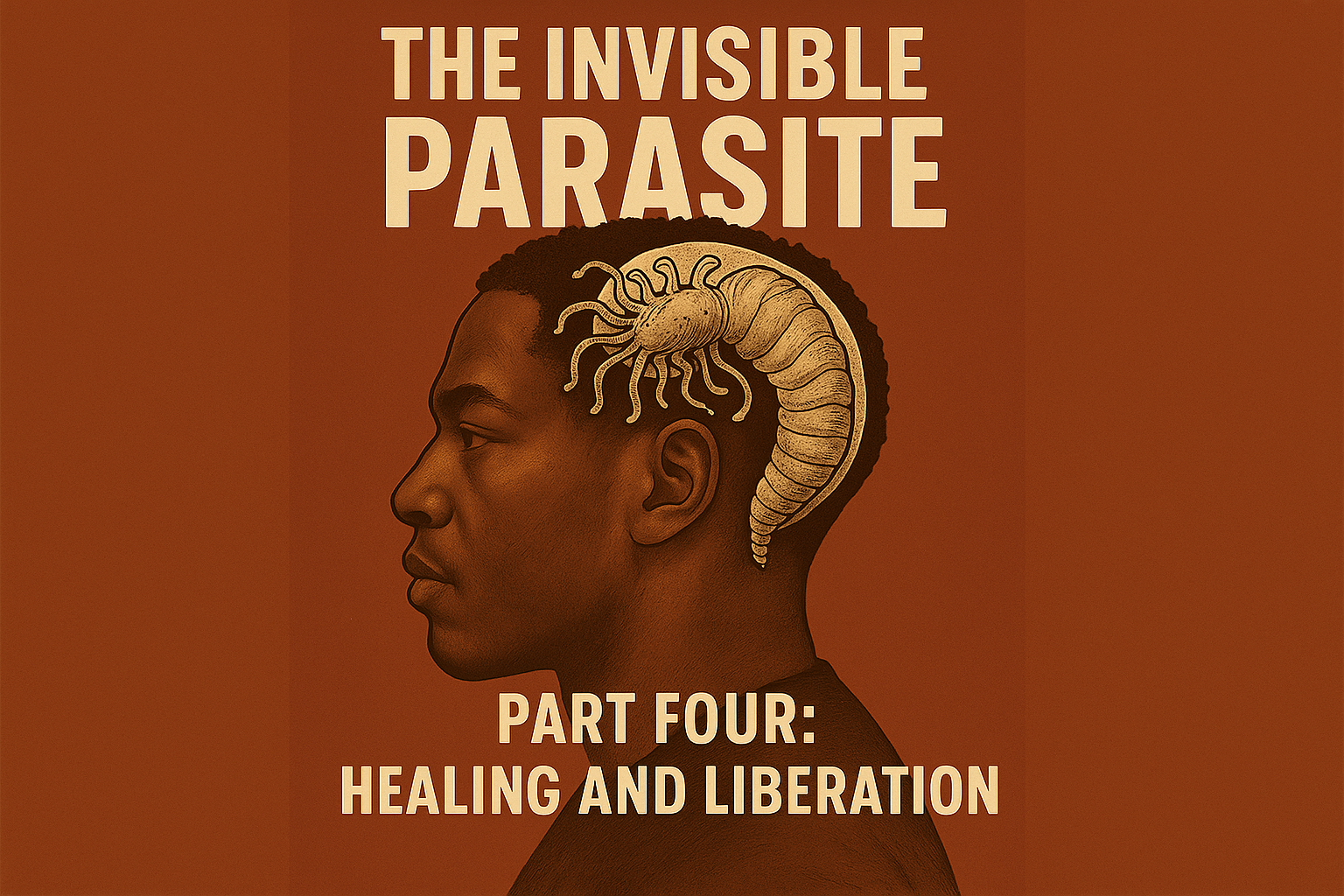
The revolution begins in our own nervous systems and extends outward through our families, communities, and the world. Today is the day we choose to see clearly, heal deeply, and live freely. The parasites of oppression only maintain their hold through our unconsciousness. The moment we truly see them, they begin to lose their power over us.
The time for conscious healing and liberation is now.
This concludes our four-part series on understanding and healing racial trauma through neurobiological awareness and culturally grounded practices. Each part of this journey—understanding the science, recognizing historical patterns, developing awareness, and engaging in healing—contributes to the broader work of individual and collective liberation.
FREE SHOCK RACIAL TRAUMA WEBINAR: http://shocktraumafreewebinar.com
“I just completed a brief session with ChatGPT-Black Trauma. Wow! The responses I got were soooooo helpfu!.” — John Jackson (Patreon Member)
At BlackTraumaGPT.com, we aim to foster healing, understanding, and empowerment within Black communities by providing culturally sensitive education, insights, and mental health resources. We aim to deepen the collective awareness of Black trauma’s historical roots and its contemporary manifestations while guiding individuals and communities toward paths of self-care, resilience, and holistic healing. By leveraging the wisdom of Africana phenomenology and the expertise of Black scholars, we support the transformation of trauma into strength, encouraging collective growth and thriving.
IT’S TIME TO BREAK BLACK TRAUMA! Heal Thyself @ BlackTraumaGPT.com http://blacktraumagpt.com/ ASK THE QUESTION(S)!
———————
Get Social with Doc SHOCK:
PATREON | ABOUT DR. SHOCK | FLY SOLO | ACADEMIC BIO | BLOG | BLACK TRAUMA PODCAST | ENDORSEMENT | THREADS | IG | FB PAGE | PRIVATE GROUP | X | LINKEDIN | TIKTOK | PINTEREST | BLACK TRAUMA GPT | BLACK AI CONSORTIUM | BOOKS BY DOC SHOCK