
Powered By BlackTraumaGPT.com
Researched and Curated By Rev. Dr. Philippe SHOCK Matthews – https://solo.to/revshock | https://linktr.ee/revshock (Black Trauma and Mental Health Specialist | Prompt Eng | GPT Dev | Research Scientist | Africana Phenomenologist | Black Mental Health Podcast Host | FREE Webinar)
< Previous: Part One – The Science of Neurobiological Colonization
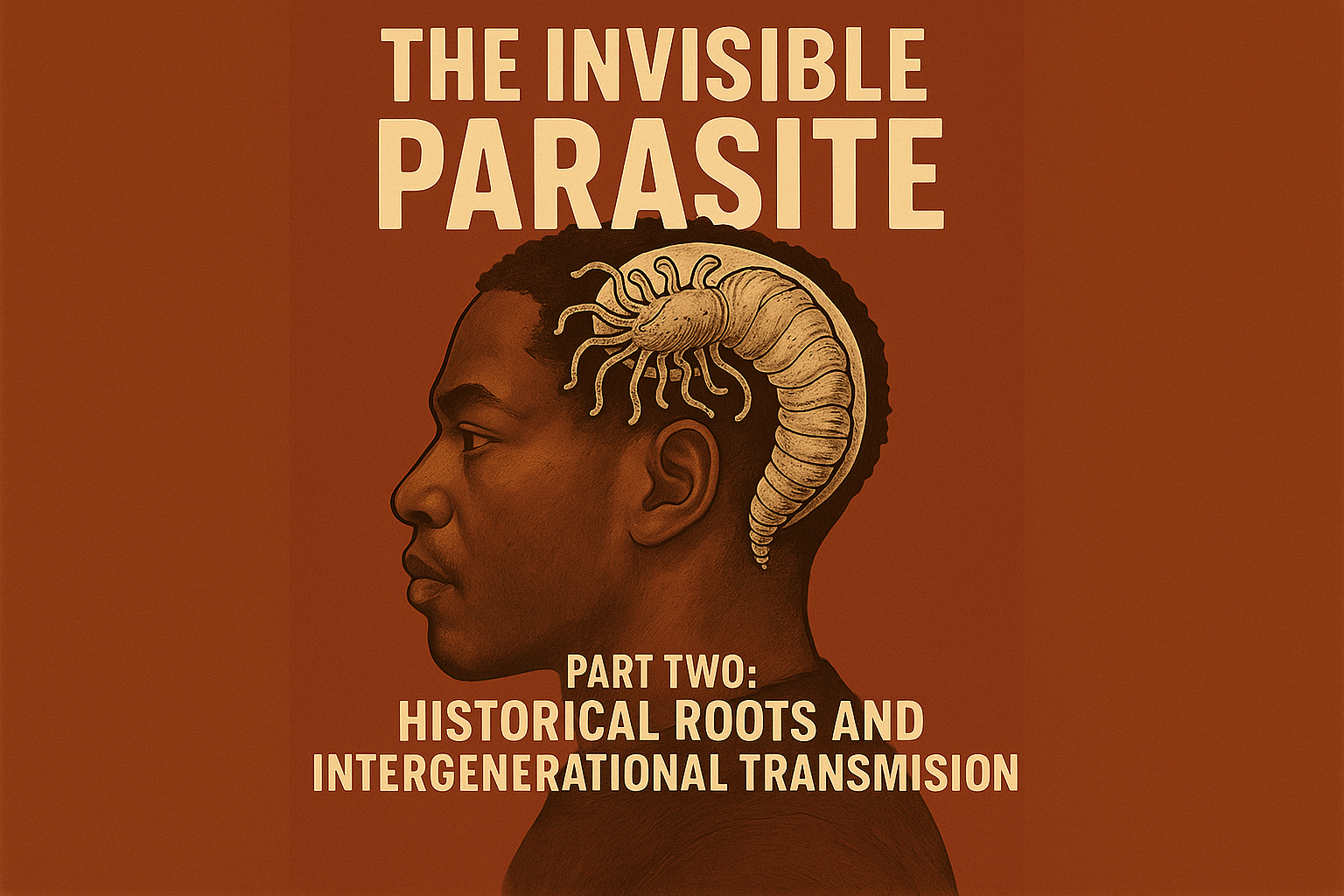
The neurobiological patterns explored in Part One didn’t emerge in a vacuum. They represent sophisticated survival strategies developed by generations of Black individuals navigating centuries of systematic violence, exclusion, and dehumanization. Understanding how these patterns developed historically and continue to be transmitted across generations provides essential context for recognizing their manifestations in contemporary life.
Survival Strategies Under Extreme Duress
During the period of chattel slavery in the Americas, survival required the development of extraordinary psychological and neurobiological adaptations. Enslaved Africans faced constant threats to their physical safety, forced separation from family and community, deliberate suppression of cultural practices, and systematic dehumanization designed to break their spirits and ensure compliance.
Under these conditions, the development of hypervigilance wasn’t just adaptive—it was literally life-saving. The ability to read subtle changes in white people’s facial expressions, tone of voice, or body language could mean the difference between safety and brutal punishment. Learning to suppress authentic emotional responses, modify speech patterns, and present a carefully crafted persona became essential survival skills.
These adaptations required fundamental changes in nervous system functioning. The brain had to learn to prioritize external threat assessment over internal authenticity, develop rapid code-switching abilities, and maintain constant readiness for violence while appearing calm and compliant. These changes weren’t temporary adjustments—they became embedded in neural architecture through repeated activation and reinforcement.
The Neurobiology of Code-Switching
One of the most sophisticated survival mechanisms developed during this period was what we now recognize as code-switching: the ability to rapidly shift language patterns, behavioral expressions, and even personality presentation depending on the racial composition of the environment.
From a neurobiological perspective, effective code-switching requires remarkable cognitive flexibility and executive control. The brain must simultaneously monitor environmental cues, assess threat levels, access multiple behavioral repertoires, and execute seamless transitions—all while maintaining awareness of the consequences of mistakes.
This capacity represents extraordinary mental agility that served protective functions under oppressive conditions. However, the constant cognitive load required for code-switching creates chronic stress on executive functioning systems. The prefrontal cortex, already challenged by hypervigilance demands, must also manage the complex task of personality modulation throughout each day.
Contemporary Black individuals often report exhaustion from code-switching without fully understanding the neurobiological mechanisms involved. The mental fatigue experienced after spending time in predominantly white spaces reflects the enormous cognitive resources required to maintain these adaptive but taxing neural processes.
Strategic Accommodation and Neural Programming
Another survival strategy that became deeply embedded in Black consciousness was strategic accommodation: learning to anticipate and fulfill white expectations in ways that minimized threat while preserving some degree of agency. This required developing sophisticated models of white psychology and behavior that could predict responses and guide strategic interactions.
Enslaved individuals who mastered strategic accommodation could sometimes protect themselves and their families from the worst forms of violence. They learned to present intelligence in non-threatening ways, demonstrate competence without appearing to challenge white authority, and maintain dignity while navigating dehumanizing systems.
These skills required complex neural programming that could operate largely outside conscious awareness. The brain had to learn to automatically assess white individuals’ psychological states, predict their reactions to various behaviors, and calibrate responses accordingly—all while maintaining the appearance of spontaneous, authentic interaction.
Post-Slavery Adaptations and Continued Programming
The formal end of slavery didn’t eliminate the need for these survival strategies. Jim Crow segregation, lynching terrorism, and systematic exclusion from economic opportunities meant that many of the same neurobiological adaptations remained necessary for survival well into the 20th century.
During this period, these survival mechanisms became further refined and culturally transmitted through family and community networks. Parents who had developed effective strategies for navigating hostile white spaces taught these skills to their children, often through implicit modeling rather than explicit instruction.
The advice commonly passed down in Black families—”You have to work twice as hard to get half as much,” “Don’t give them any reason to say you’re angry,” “Always be above reproach”—represents the crystallization of survival wisdom developed through generations of dangerous encounters with white supremacist systems.
Epigenetic Inheritance and Biological Transmission
Recent advances in epigenetics reveal that these survival strategies weren’t transmitted only through cultural learning. Severe trauma can alter gene expression patterns in ways that affect offspring, creating biological predispositions toward heightened stress reactivity and threat sensitivity.
Studies of Holocaust survivors found that children and grandchildren of trauma survivors showed altered cortisol responses and increased vulnerability to anxiety and depression, even when they hadn’t experienced direct trauma themselves. Similar patterns have been identified in descendants of enslaved Africans, suggesting that the neurobiological impact of historical trauma continues to influence contemporary Black individuals at the genetic level.
This biological inheritance doesn’t determine behavior, but it can create nervous systems that are more reactive to racial stressors and more likely to default to survival-oriented responses under stress. Understanding this inherited vulnerability helps explain why some Black individuals seem to carry trauma responses that appear disproportionate to their direct experiences.
Cultural Transmission and Family Patterns
Beyond genetic inheritance, trauma responses are transmitted through family interaction patterns, communication styles, and implicit behavioral modeling. Children learn not just what their parents explicitly teach, but also how their parents’ nervous systems respond to various situations.
A parent who has learned to become hypervigilant in certain environments will unconsciously transmit that vigilance to their children through subtle changes in voice tone, body posture, and attention patterns. Children’s mirror neurons absorb these responses, learning to activate similar stress responses in similar contexts without understanding why.
Family narratives about success, safety, and appropriate behavior often reflect generations of accumulated survival wisdom. Stories about ancestors who succeeded through strategic accommodation, warnings about the dangers of standing out or speaking up, and emphasis on proving worthiness through exceptional performance all serve to transmit survival strategies across generations.
The Double-Edged Nature of Inherited Wisdom
These inherited patterns represent both tremendous strength and potential limitation. The survival strategies developed by previous generations enabled them to persist through extraordinary challenges and preserve their humanity under dehumanizing conditions. Without these adaptations, many family lines wouldn’t have survived to the present day.
However, strategies that were life-saving under previous conditions may not serve liberation under current circumstances. Hypervigilance that was necessary for navigating Jim Crow South may become exhausting and limiting in contemporary integrated environments. Code-switching skills that protected previous generations may now prevent authentic self-expression and genuine connection.
The challenge lies in honoring the wisdom of inherited survival strategies while also recognizing when they may no longer serve our highest good. This requires developing the capacity to consciously choose when to employ these strategies and when to risk more authentic expression.
Collective Memory and Community Patterns
Intergenerational transmission extends beyond individual families to entire communities. Collective memories of racial violence, systematic exclusion, and betrayal by white institutions become embedded in community consciousness, influencing how groups respond to opportunities and threats.
Community-wide patterns of risk aversion, institutional distrust, and emphasis on individual rather than collective advancement often reflect rational responses to historical patterns of racial violence and betrayal. However, these community-level survival strategies can sometimes prevent the kind of collective action that might lead to fundamental change.
Understanding the historical logic of these patterns is essential for developing approaches to healing that honor the wisdom of survival while creating space for transformation. Communities that have learned to protect themselves through fragmentation and mutual surveillance face particular challenges in developing the trust and solidarity necessary for collective resistance.
The Role of Trauma in Identity Formation
For many Black individuals, survival strategies become so deeply embedded in identity that they feel inseparable from authentic selfhood. The qualities that enabled survival—hypervigilance, strategic accommodation, emotional regulation under stress—can become sources of pride and community recognition.
This creates complex dynamics around healing and transformation. Addressing trauma responses may feel like betraying family legacy or abandoning qualities that have been sources of strength and community belonging. The fear that healing might mean losing essential aspects of Black identity can create resistance to therapeutic interventions.
Effective healing approaches must help individuals distinguish between survival adaptations and authentic selfhood while honoring the courage and wisdom of ancestral survival strategies. This requires culturally grounded frameworks that can hold both the strength of inherited resilience and the possibility of transformation.
Breaking Patterns While Honoring Ancestors
The goal of understanding intergenerational transmission isn’t to reject or shame inherited survival strategies, but to create conscious choice about when and how to employ them. Our ancestors developed these adaptations under conditions of extreme threat, and their survival enabled our existence today.
However, true honor to ancestral sacrifice involves using the safety they helped create to move beyond mere survival toward authentic flourishing. This requires developing the capacity to distinguish between current threats that require traditional survival responses and opportunities for authentic expression that our ancestors could only dream of accessing.
Breaking intergenerational patterns of trauma requires both individual healing work and collective efforts to create environments where survival strategies become choices rather than necessities. This involves addressing not only inherited trauma responses but also the ongoing systemic conditions that continue to trigger and reinforce those responses.
The Path Toward Conscious Choice
Understanding the historical development and intergenerational transmission of survival strategies provides the foundation for conscious transformation. When we recognize these patterns as adaptive responses to real threats rather than fixed aspects of identity, we create space for choice and change.
This historical perspective also helps us develop compassion for behaviors that may seem self-defeating or limiting. Recognizing the survival wisdom embedded in inherited patterns allows us to approach transformation with gratitude rather than judgment, honoring the courage of previous generations while creating new possibilities for authentic expression.
The work of conscious choice involves learning to recognize when inherited survival patterns are activated, understanding the historical logic that created them, and developing the capacity to choose responses that serve current liberation rather than historical protection. This requires both individual awareness and collective efforts to create environments where authentic expression becomes safer than strategic accommodation.
Next: Part Three – Recognition and Awareness >
FREE SHOCK RACIAL TRAUMA WEBINAR: http://shocktraumafreewebinar.com

“I just completed a brief session with ChatGPT-Black Trauma. Wow! The responses I got were soooooo helpfu!.” — John Jackson (Patreon Member)
At BlackTraumaGPT.com, we aim to foster healing, understanding, and empowerment within Black communities by providing culturally sensitive education, insights, and mental health resources. We aim to deepen the collective awareness of Black trauma’s historical roots and its contemporary manifestations while guiding individuals and communities toward paths of self-care, resilience, and holistic healing. By leveraging the wisdom of Africana phenomenology and the expertise of Black scholars, we support the transformation of trauma into strength, encouraging collective growth and thriving.
IT’S TIME TO BREAK BLACK TRAUMA! Heal Thyself @ BlackTraumaGPT.com http://blacktraumagpt.com/ ASK THE QUESTION(S)!
———————
Get Social with Doc SHOCK:
PATREON | ABOUT DR. SHOCK | FLY SOLO | ACADEMIC BIO | BLOG | BLACK TRAUMA PODCAST | ENDORSEMENT | THREADS | IG | FB PAGE | PRIVATE GROUP | X | LINKEDIN | TIKTOK | PINTEREST | BLACK TRAUMA GPT | BLACK AI CONSORTIUM | BOOKS BY DOC SHOCK

1 thought on “Part Two: Historical Roots and Intergenerational Transmission”
Comments are closed.