
By Rev. Dr. Philippe SHOCK Matthews, Research Scientist in Africana Phenomenology
“It is characteristic of the blacks that their consciousness has not yet arrived at the intuition of any objectivity. He is a being in the rough. Africa has no historical part of the world. It has no movement or development to exhibit.” – Georg Wilhelm Friedrich Hegel
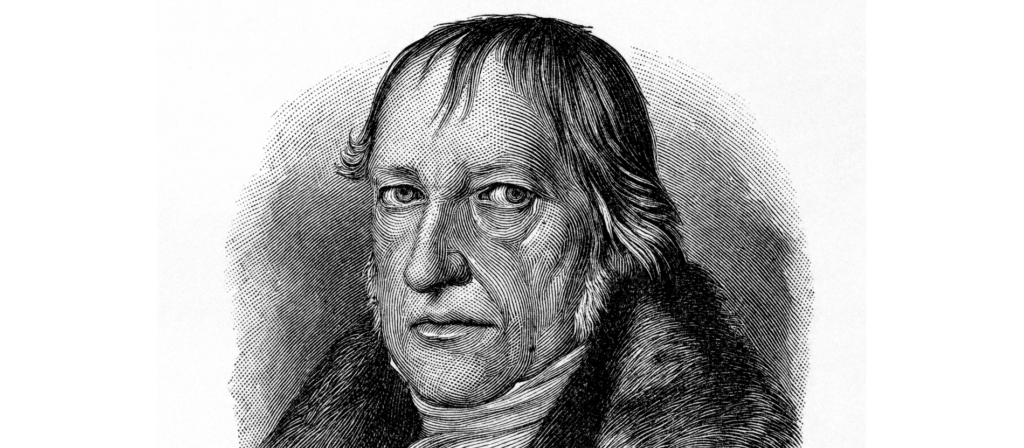
Grand Rising Family!
Hegel’s erasure of African history is not ancient academic drama confined to dusty European philosophy lectures. It is, in the most precise phenomenological sense, a living wound — one that continues to shape how Black people see themselves, how institutions treat African civilization, and how artificial intelligence systems encode and reproduce centuries-old lies. What Georg Wilhelm Friedrich Hegel wrote in 1837 was not philosophy. It was a blueprint for cultural annihilation dressed in the language of reason.
And the world believed him.
In my years of research as a scientist in Africana phenomenology and as the founder of SHOCKmethod.com, I have come to understand that the single most devastating weapon ever deployed against the African psyche was not the whip or the chain — it was the philosophical declaration that Africa had no history worth knowing. Before you can enslave a people’s body, you must first enslave their consciousness. Hegel provided the intellectual architecture for both.
The Sentence That Rewired a World
In The Philosophy of History, Hegel wrote that Africa was ‘the Unhistorical, Undeveloped Spirit, still involved in the conditions of mere nature.’ He described the continent as ‘no historical part of the world’ — a threshold that Europe merely crossed on its march toward civilizational greatness. These weren’t the musings of a fringe thinker. Hegel was the intellectual giant of 19th-century Europe, and his ideas didn’t just shape academic discourse. They shaped colonial policy, anthropological frameworks, educational curricula, and the psychological formation of white supremacy as a governing ideology.
What makes this particularly sinister from an Africana phenomenological standpoint is the method Hegel used. He wasn’t ignorant of African civilization in any casual sense. He had reports of Kemet — ancient Egypt — with its 3,000 years of continuous recorded history. He knew of Ethiopian Christianity, the universities of Timbuktu, and the stone architecture of Great Zimbabwe. He possessed the evidence. And then he chose to construct a philosophical system in which that evidence simply could not count.
“He took the absence of European knowledge about Africa and transformed it into evidence that Africa had no knowledge worth having. That is not philosophy — that is epistemological violence.”
— Rev. Dr. Philippe SHOCK Matthews
This is what I call a Peremptorical History — a history written in advance, with the conclusion already determined, into which all facts must be squeezed or discarded. Hegel needed Africa to be ahistorical because his entire system required Europe to represent the pinnacle and endpoint of human development. The facts were inconvenient. So he redefined the criteria for what counted as ‘history’ — and then moved those goalposts every single time African civilization cleared the bar.
A Civilization Deliberately Rendered Invisible
Let us be precise about what was erased. When Hegel dismissed Egypt as ‘Mediterranean’ rather than African — despite the continent being, geographically and unmistakably, IN AFRICA — he wasn’t making an error. He was performing an operation. The same operation was performed on Timbuktu’s universities, founded between the 12th and 14th centuries, which housed over 700,000 manuscripts on astronomy, medicine, mathematics, philosophy, and law. Hegel called it ‘Islamic influence’ — as though African scholars building institutions of African knowledge on African soil using African funding somehow did not constitute African history.
Great Zimbabwe, a stone city housing 18,000 people built without mortar, with walls standing 36 feet high that have endured 800 years, when European colonizers discovered it in 1871, they refused to believe Africans had built it. Why? Because Hegel had already told them that Africans couldn’t. The lie preceded the archaeology. The ideology shaped the evidence.
This is the Trinity of Black Trauma I have spent years documenting: the historical injury (what was done), the systemic injury (how institutions encoded it), and the psychological injury (what it did to Black minds over generations). Hegel sits at the origin point of all three dimensions. His philosophical erasure of Hegel’s erasure of African history created the intellectual permission structure for colonialism, slavery’s continuation, Jim Crow, and the algorithmic bias we now find embedded in artificial intelligence systems trained on Western-dominated datasets.
YOUR HEALING CANNOT WAIT
If this history stirs something in you — that is recognition, not rage.
Visit SHOCKmethod.com to begin your journey of Radical Self Evolution.
The Four Frequencies and the Philosophical Crime Against Black Consciousness
In my framework of the Four Frequencies of Humanity, the First Frequency represents a person’s connection to their divine, ancestral, and original identity — what I call the Amma/God-consciousness that existed before colonial trauma fractured it. The Second Frequency emerges from trauma-induced contact with European consciousness, producing an internalized framework that measures Black life against a white standard. The Third Frequency is the ‘domesticated’ or assimilated identity — the so-called ‘good Negro’ who has absorbed the oppressor’s worldview. The Fourth Frequency is adaptive misidentification — the thug identity, the bad Negro, the person who has internalized the oppressor’s worst projections and made them a survival strategy.
Hegel’s philosophical lie is a direct instrument of Second Frequency consciousness. When a Black child in an American classroom learns world history without a single mention of Kemet, Songhai, or Timbuktu, that child is being initiated into a Second Frequency identity. They are being taught, implicitly and powerfully, that their ancestors produced nothing. That their lineage is a footnote. That history — real history — belongs to someone else.
This is not a side effect of a flawed curriculum. This is Hegel’s operating system, still running.
“Nothing is wrong with Black people — something happened to Black people. And one of the most devastating things that happened was the systematic destruction of their historical consciousness.”
— Rev. Dr. Philippe SHOCK Matthews
The SHOCK Method — Seeking Higher Omnipotent Conscious/Cosmic Knowledge — begins precisely where Hegel ends. Where Hegel declared African history nonexistent, the SHOCK Method begins excavating it. Where colonial philosophy severed Black people from their First Frequency ancestral identity, the SHOCK framework creates pathways back. Healing, in the Africana phenomenological tradition I work within, is not primarily therapeutic in the Western clinical sense. It is ontological. It is a return to being.
What Kemet, Timbuktu, and Great Zimbabwe Actually Prove
For those who want not just the argument but the evidence, let us be specific. Hegel was not merely wrong about African civilizations in the abstract. He was wrong about each one, individually and precisely. Here is what the archaeological and historiographical record actually shows:
- Kemet (Ancient Egypt): Over 3,000 years of continuous civilization with written records in hieroglyphic, hieratic, and demotic scripts — predating European writing systems. Mathematical texts like the Rhind Papyrus document fractions, geometry, and algebraic operations. Surgical and pharmacological texts demonstrate advanced medical science. The solar calendar, pyramid alignments, and Sirius observations reveal astronomical sophistication. Hegel claimed Egypt was ‘Mediterranean’ because acknowledging it as African would collapse his entire system.
- Timbuktu and the Mali-Songhai Intellectual Tradition: Universities established in the 12th through 14th centuries — before Oxford’s curriculum was standardized — housed 25,000 students at peak enrollment. Over 700,000 manuscripts survive today, covering philosophy, mathematics, law, astronomy, and medicine. These institutions were founded by Africans, funded by African empires, and staffed by African scholars. Hegel’s response was to call it ‘Islamic’ — as though African people building knowledge systems using Arabic script somehow stopped being African.
- Great Zimbabwe (1100–1450 CE): Built contemporaneously with medieval Europe, this stone city housed 18,000 people behind 36-foot walls constructed without mortar. Artifacts from China, Persia, and Arabia confirm it was an international trade hub. When European colonizers arrived in 1871, they attributed it to Phoenicians, Arabs, anybody but Africans — because Hegel had already told them Africans were incapable of such construction.
- The Songhai Empire (15th–16th centuries): Spanning 1.4 million square kilometers — larger than Western Europe — Songhai maintained a civil service, legal system, military, and trans-Saharan economic network that were contemporaneous with the European Renaissance. Hegel’s dismissal of Islamic ‘influence’ ignored the fact that African governance structures predated Islam’s arrival on the continent by millennia.
The Lie Became Institutional — and Then Algorithmic
The philosophical crime Hegel committed in 1837 did not remain in philosophy classrooms. It migrated. It took up residence in museum curatorial decisions that labeled African sacred objects as ‘primitive art’ rather than philosophy. It shaped the anthropological tradition that positioned Africans on the lowest rung of a fabricated civilizational hierarchy. It determined which stories got taught, which voices got published, and which knowledges got funded.
And now, in the 21st century, it has taken up residence inside artificial intelligence systems. AI models trained predominantly on Western text corpora inherit Hegelian assumptions about what constitutes knowledge, who has produced it, and whose historical record deserves representation. This is precisely why I founded SHOCKmethod.com — because the digital divide is not merely a socioeconomic access problem. It is an epistemological one. If the AI systems shaping education, healthcare, law, and finance are trained on data that erases or distorts African history, then Hegel’s lie has found its most powerful amplification technology yet.
The SHOCK Method applied to the digital age insists that Radical Self Evolution — the process of neurological and spiritual reclamation from colonial trauma — must include digital sovereignty. Black communities need AI tools built from First Frequency consciousness, not Second Frequency assumptions. That is what SHOCKmethod represents: a Digital Third Space where African epistemology is not peripheral but foundational.
BREAK THE DIGITAL DIVIDE. RECLAIM YOUR HISTORY.
SHOCKmethod.com is building AI from an African-centered foundation.
Join the movement.
Because your ancestors deserve better than Hegel’s footnote.
What Hegel Should Have Said — and Why He Didn’t
There is an intellectually honest version of what Hegel could have written in 1837. It would have read something like this: ‘I do not possess sufficient knowledge of African civilizations to include them in this analysis. My sources are limited to European accounts, which are demonstrably incomplete and shaped by colonial bias. Future scholars with access to primary African sources will be better positioned to assess Africa’s philosophical and historical contributions.’
He did not write that. He chose certainty over accuracy, imperial convenience over intellectual integrity. And this, from the Africana phenomenological standpoint, is the defining act of what I call historiographical suppression — the deliberate weaponization of philosophy to render entire peoples cognitively invisible.
What is remarkable, though — and this is what my research keeps returning to — is the resilience embedded in the historical record itself. The manuscripts of Timbuktu survived. The walls of Great Zimbabwe still stand. The mathematics of the Rhind Papyrus still solve. Hegel lied about African history, but African history did not cooperate with the lie. It persisted. It endured. And it is being recovered, documented, and taught with increasing frequency by African and African diaspora scholars who understand that historical reclamation is itself an act of healing.
From Historical Erasure to Psychological Liberation: The Path Forward
Understanding that Hegel’s erasure of African history was a deliberate philosophical construction — not an innocent oversight — is not merely academic. For Black people living in the aftermath of this lie, the stakes are profoundly personal. When a young Black student absorbs the implicit message that their ancestors contributed nothing to human civilization, that message does not stay in the classroom. It migrates into identity, into self-worth, into the ways a person moves through the world. It operates at the frequency level — pulling people away from First Frequency consciousness toward the Second, Third, and Fourth Frequencies of trauma-shaped identity.
The path through this is what I call Radical Self Evolution — a process that integrates ancestral knowledge reclamation, trauma-informed healing, and spiritual reconnection. It is not enough to simply correct the historical record, though that is necessary and urgent. The correction must penetrate to the level of lived experience, of felt identity, of what it means in the body and the soul to know that your people built universities when Europe was still emerging from feudalism.
The SHOCK Method — Seeking Higher Omnipotent Conscious/Cosmic Knowledge — provides a structured pathway for this work. It begins with acknowledgment: something happened to Black people. The philosophical destruction of African historical consciousness is one of the most consequential events. From acknowledgment, the method moves into excavation: recovering what was buried. Then into reconstruction: rebuilding identity from recovered ancestral foundation. And finally, into application: living from First Frequency consciousness in a world that still, too often, operates on Hegelian assumptions.
“The goal was never simply to prove Hegel wrong — though the evidence does that thoroughly. The goal is to help Black people remember what they always were, before the lie.”
— Rev. Dr. Philippe SHOCK Matthews
This is the work. It is historical, yes. But it is also deeply psychological, deeply spiritual, and deeply urgent. Every generation that grows up without knowing Timbuktu, without knowing Kemet, without knowing that African philosophy predates Plato, is a generation navigating — I will use that word deliberately, because it describes what colonized consciousness feels forced to do — an identity crisis manufactured by a 19th-century German philosopher who chose imperial convenience over truth.
We are not obligated to keep living inside Hegel’s lie.
BEGIN YOUR RADICAL SELF EVOLUTION
Remember — nothing is wrong with Black people. Something happened to Black people.
IT’S TIME TO BREAK BLACK TRAUMA!
Start healing today at SHOCKmethod.com
References
Hegel, G. W. F. (1837/1956). The Philosophy of History. Dover Publications.
Diop, C. A. (1974). The African Origin of Civilization: Myth or Reality. Lawrence Hill Books.
Asante, M. K. (2003). Afrocentricity: The Theory of Social Change. African American Images.
Van Sertima, I. (1976). They Came Before Columbus: The African Presence in Ancient America. Random House.
Ani, M. (1994). Yurugu: An African-Centered Critique of European Cultural Thought and Behavior. Africa World Press.
Wynter, S. (2003). Unsettling the Coloniality of Being/Power/Truth/Freedom. CR: The New Centennial Review, 3(3), 257–337.
Matthews, P. S. (2024). SHOCKmethod: Africana Phenomenology in the Age of Artificial Intelligence. ShockMetaphysics.com.
Ikwuemesi, C. E. (2024). Why Hegel Was Wrong: The Evidence. Afrodeities Press.