
Skip to content
SHOCKmetaphysics.com

Forensic Research in Africana Phenomenology and the Trinity of Black Trauma

  • The SHOCK Method™
  • Book a Discovery Call
  • Research
  • Journal
  • Books
  • Media
  • About
  • Contact
  • Resources
  • Search
  • Subscribe
  • The SHOCK Method™
  • Book a Discovery Call
  • Research
  • Journal
  • Books
  • Media
  • About
  • Contact
  • Resources
  • Search
  • Subscribe

Tag: Four Frequencies of Humanity

Second Frequency Love: How Trauma Teaches Us to Perform Intimacy Instead of Feel It
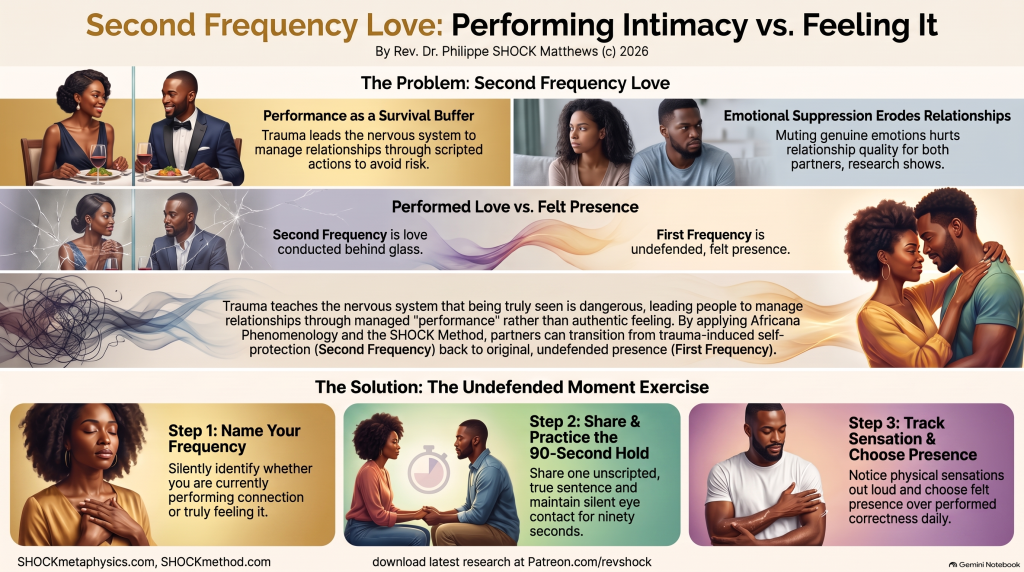
Infographic titled Second Frequency Love: Performing Intimacy vs. Feeling It by Rev. Dr. Philippe SHOCK Matthews. The top panels describe the problem: performance as a survival buffer and emotional suppression eroding relationships. The middle panel contrasts Second Frequency love conducted behind glass with First Frequency undefended, felt presence. The bottom panels present the Undefended Moment Exercise: name your frequency, share one true sentence and hold eye contact for ninety seconds, then track sensation and choose presence.

Why does it still feel empty when everything looks right? A trauma-informed, Africana phenomenological look at performed intimacy, with a five-step Undefended Moment exercise for couples.

The SHOCK Method for Couples: A Trauma-Informed Framework for Repair
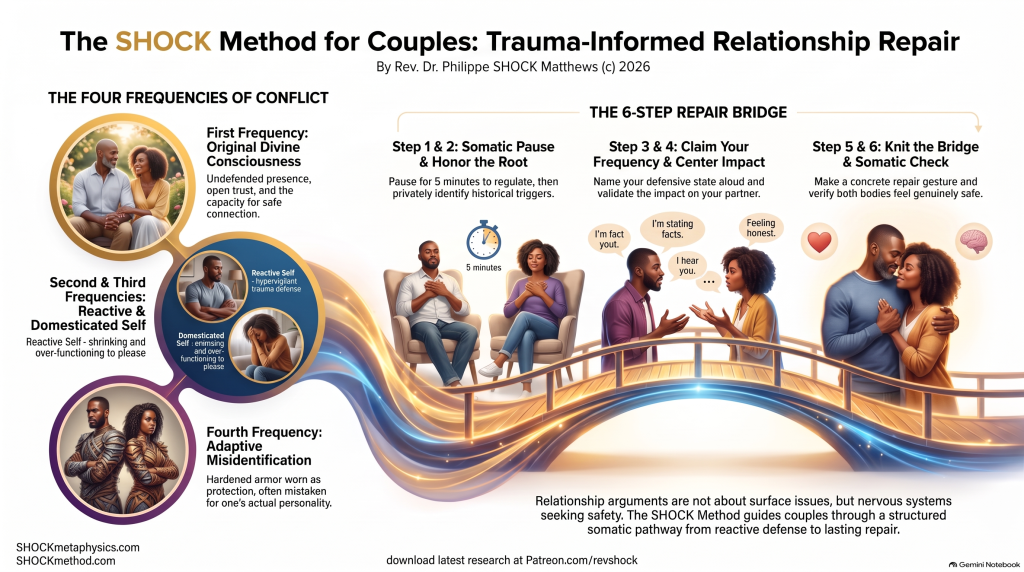
Infographic titled The SHOCK Method for Couples: Trauma-Informed Relationship Repair by Rev. Dr. Philippe SHOCK Matthews. The left side presents the Four Frequencies of Conflict, from First Frequency original divine consciousness to Second and Third Frequency reactive and domesticated selves to Fourth Frequency adaptive misidentification. The right side shows the 6-Step Repair Bridge: somatic pause and honoring the root, claiming your frequency and centering impact, and knitting the bridge with a somatic check.

Couples rarely rupture over dishes. They rupture over unmet bids for safety that predate the relationship. A trauma-informed, Africana phenomenological framework and a six-step Repair Bridge for couples.

Building a Digital Sanctuary: Why We Created BlackLoveGPT
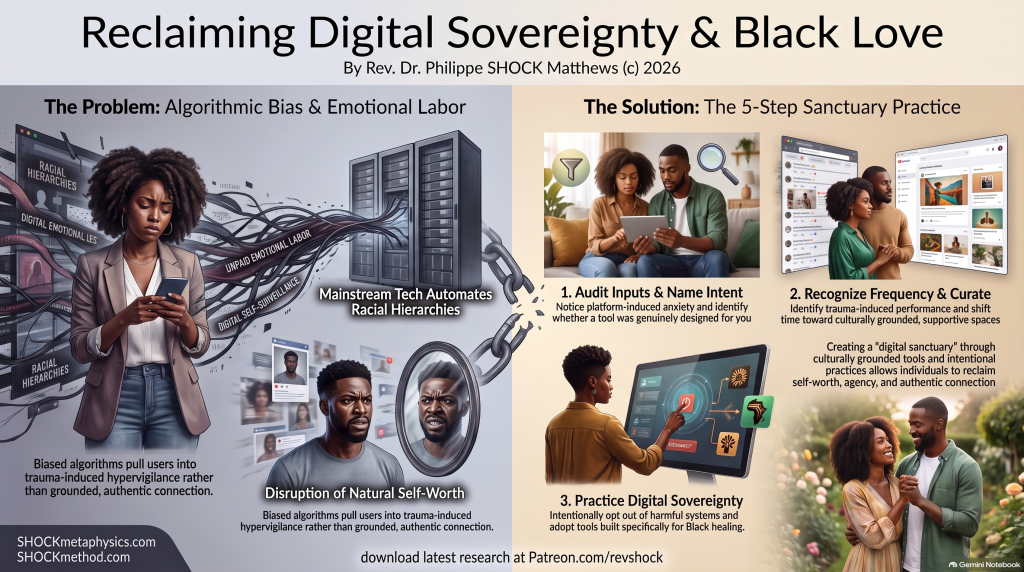
Infographic titled Reclaiming Digital Sovereignty and Black Love by Rev. Dr. Philippe SHOCK Matthews. The left panel, The Problem: Algorithmic Bias and Emotional Labor, shows a troubled Black woman holding her phone and a Black man frowning at his reflection, with server racks and chains representing racial hierarchies and unpaid emotional labor. The right panel, The Solution: The 5-Step Sanctuary Practice, shows Black couples auditing their digital inputs, curating supportive spaces, and practicing digital sovereignty, ending with a couple smiling together in a garden.

Naming the wound is necessary but not sufficient. The origin of BlackLoveGPT, the case for digital sovereignty, and a five-step Sanctuary Building Practice grounded in Africana phenomenology.

Algorithmic Loneliness: How Dating Apps Are Failing Black Love

A Black woman and a Black man sit apart in a dim bedroom, each weary and resting a head on one hand while scrolling a phone, with dating-profile photos on the wall behind them and the title Algorithmic Loneliness: How Dating Apps Are Failing Black Love

Dating app algorithms can leave Black daters feeling filtered out by design. A trauma-informed, Africana phenomenological look at algorithmic loneliness, plus a six-step practice for returning to your worth.

Why Black Love Feels Like Work: Attachment Wounds and the Myth of Effortless Romance

A Black woman rests her chin on her hand with a pensive, weary expression while her partner leans in beside her on a couch, beneath the title "Why Black Love Feels Like Work: Attachment Wounds & the Myth of Effortless Romance"

When love feels like constant vigilance, the problem may be an attachment wound, not your partner. A trauma-informed, Africana phenomenological look at why Black love feels like work, with a three-breath practice.

Chosen Family and the Antidote to Isolation: Rebuilding Belonging After Betrayal or Loss

Three Black adults sitting close together on a couch, smiling warmly at one another, illustrating chosen family and belonging after betrayal or loss

Betrayal trauma teaches the nervous system that connection is unsafe. A trauma-informed, Africana phenomenological look at rebuilding chosen family and belonging after betrayal or loss.

Algorithms of Despair: How Social Media and AI Curation Deepen Isolation for Black Youth
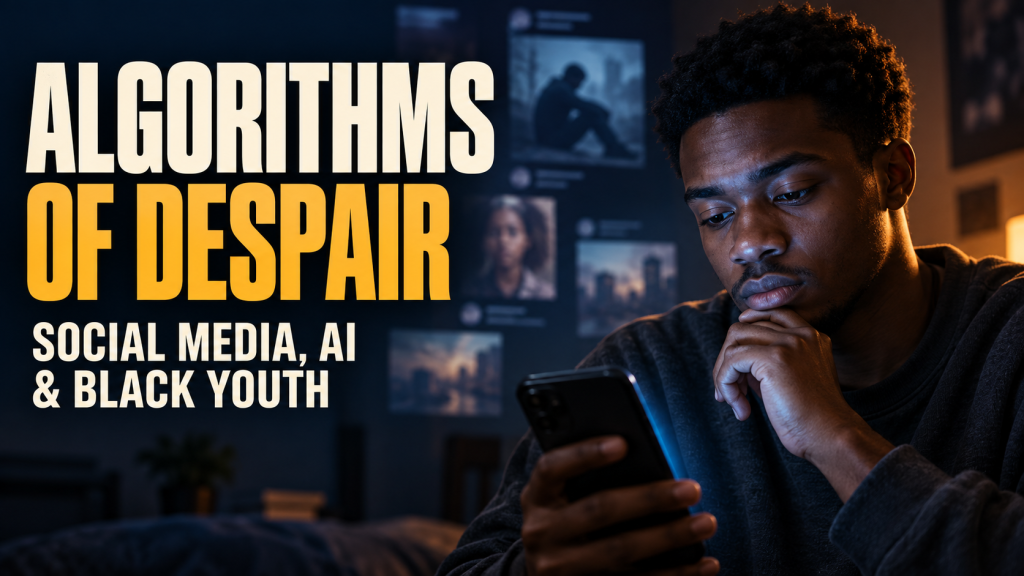
Young Black man in a dark bedroom, his face lit by his phone, with blurred distressing social media posts glowing behind him beneath the title “Algorithms of Despair: Social Media, AI & Black Youth”

How engagement-driven algorithms and AI curation deepen isolation for Black youth, with a trauma-informed SHOCK Method practice to reclaim the feed.

SHOCKmetaphysics.com

Forensic Research in Africana Phenomenology and the Trinity of Black Trauma

  • YouTube
  • Instagram
  • LinkedIn
  • Facebook
  • Facebook Group
  • Substack
  • Patreon
  • X
  • TikTok
  • Subscribe — Free 7-Day Course

Privacy Policy · Terms of Use · Disclaimer · Contact
© 2026 SHOCKmetaphysics. All rights reserved. Earlier works retain their original copyright dates.